Every Ayurvedic hair oil worth the name starts with the same small, unremarkable-looking plant. Eclipta alba — Bhringraj, literally "king of hair" in Sanskrit — is a creeping herb that grows in wet ground across India. Its leaves are the base of the ritual.
How it is traditionally prepared
Fresh leaves are crushed and slow-cooked into a carrier oil — usually sesame or coconut — until the water content has gone and the oil takes on its dark, grassy colour. That infusion, not an extract, is what gets massaged into the scalp. We keep to the same method, cold-pressing the carrier and steeping the herb rather than heating it aggressively, which is why the oil smells green rather than burnt.
What it is used for
In the tradition, Bhringraj is the herb for shedding and for hair that greys early. Modern users mostly notice two things: a scalp that feels cooler and less irritated within a couple of weeks, and less hair in the shower drain after a month or so. We make no medical claims — this is a traditional botanical, not a drug — but it has held its place at the centre of the ritual for a very long time.
The trio: Bhringraj, Amla, Brahmi
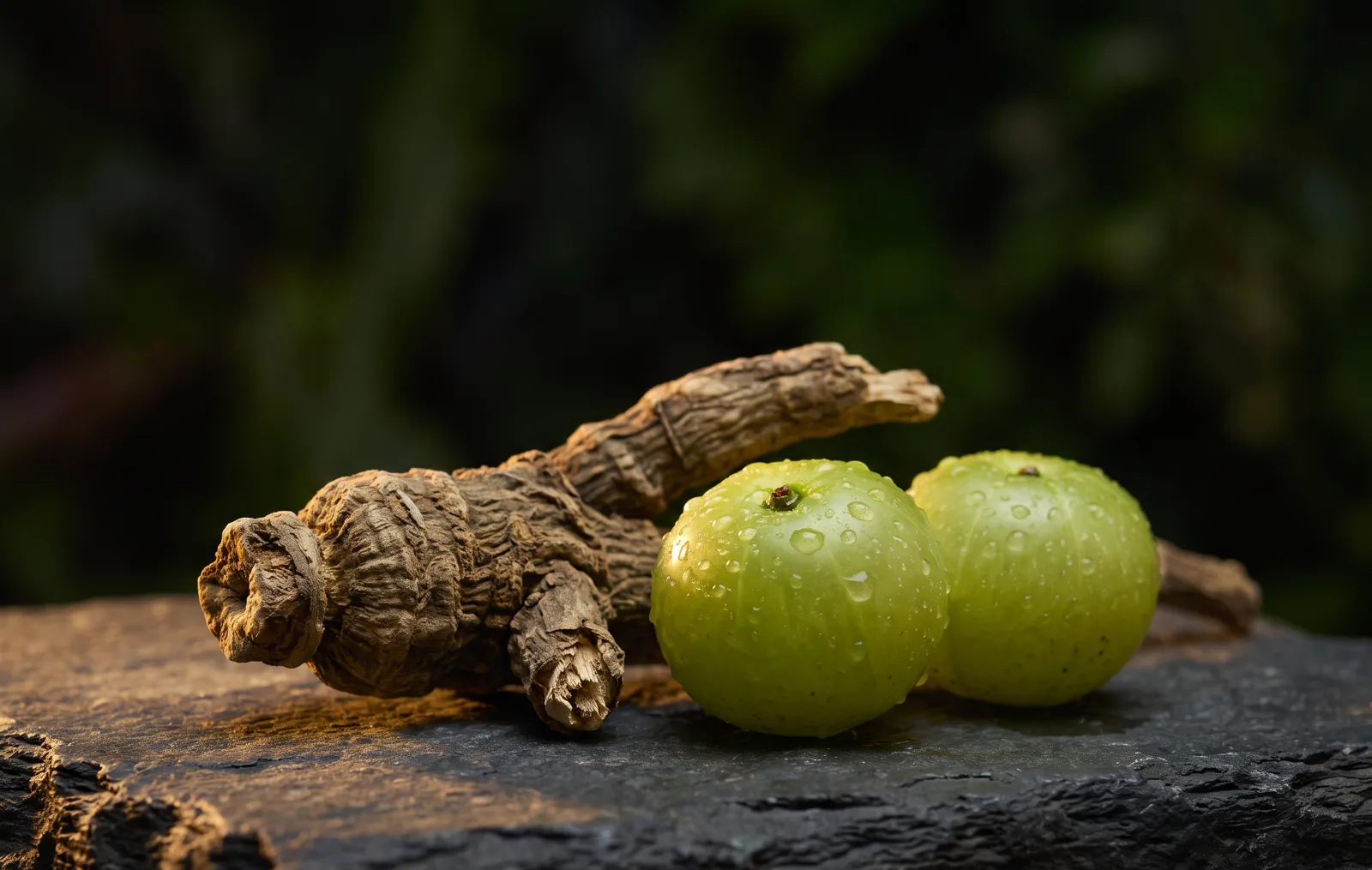
Bhringraj rarely works alone. Amla, the Indian gooseberry, brings natural vitamin C and a conditioning effect on the strand; Brahmi is the cooling, calming leaf. Together they cover root, strand and scalp — which is why the three of them headline the Signature Root Oil, with Rosemary, Methi, Hibiscus and Curry Leaf supporting and a base of Sesame and Castor carrying them in.
Explore every botanical in the blend on our ingredients tree.
Ready to start? The Signature Root Oil is the ritual in one bottle — free shipping over $50.
Shop the ritual